
What a Sizzling Eggs predictor claims to do
Search around long enough and you will find apps, browser extensions and Telegram channels promising to tell you exactly when a Collector Egg will hit, when Collect to Infinity will appear, or which spin is about to pay big on Sizzling Eggs. They usually come with a screenshot of a fat balance, a countdown timer creating urgency, and a price tag. The pitch is always the same shape: pay a fee, install something, and get signals that supposedly read the game before it happens.
Before going further, it’s worth being blunt about what these tools are actually offering versus what they can possibly deliver. A predictor is a piece of software running on your device or in a browser tab. Sizzling Eggs, on the other hand, is served from Wazdan’s game engine, with every spin outcome generated on the provider’s side at the moment you press spin. There is no channel through which an external app could see that outcome in advance, because the outcome doesn’t exist until the RNG generates it.
The gap between marketing and mechanics
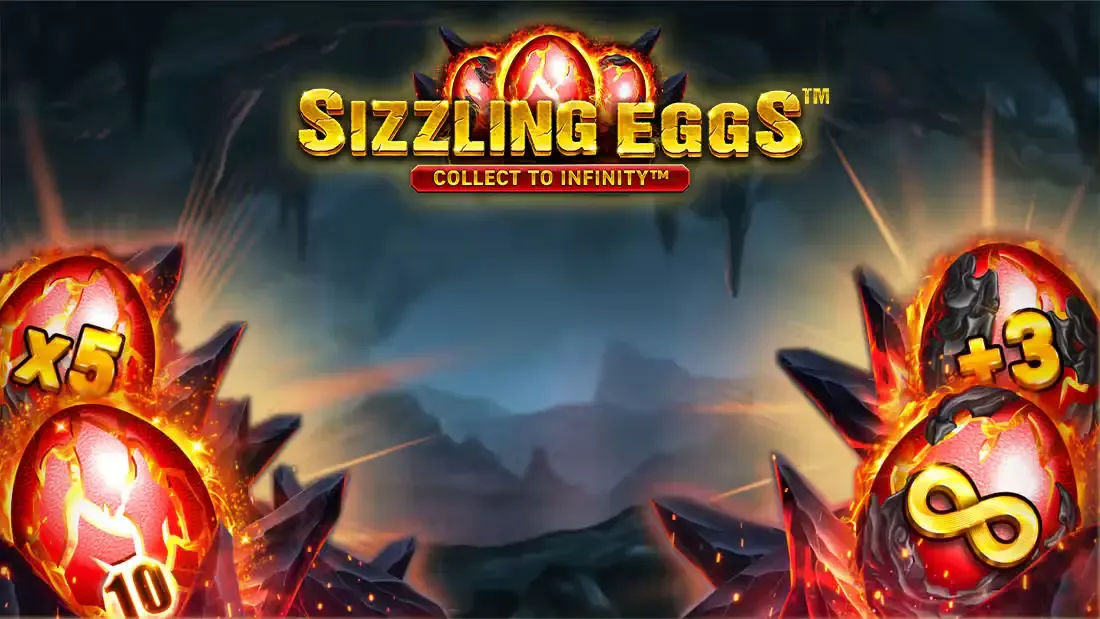
What these tools tend to sell is a feeling of control layered on top of a game whose central appeal is that you can’t control it. Sizzling Eggs runs on Collector Eggs with randomly assigned countdowns from 1 to 10, sitting above reels where Cash symbols (1x-10x) and Jackpot symbols (20x, 50x, 100x and 200x) hold no value until a Collector gathers them. Every one of those elements — where an egg lands, its countdown, what values sit beneath it, whether a Multiplier or Countdown Booster shows up — is an independent random event. A predictor claiming to forecast any of that isn’t reading hidden data. It’s guessing, then wrapping the guess in a dashboard.
Why signals sound convincing anyway
Signal-based tools often work by pattern-matching recent spins and presenting a probability score, or by simply issuing alerts on a timer regardless of what’s happening on the reels. Because Sizzling Eggs already produces natural streaks and dry spells as part of its very high default volatility, a signal that says “bigger win likely soon” will occasionally line up with a real Collector payout purely by chance. That coincidence gets screenshotted and shared as proof. It isn’t proof of anything except that random distributions sometimes cluster, which they do in every RNG game, predictor or not.
Does a predictor actually work on Sizzling Eggs
The honest answer, grounded in how the game is built rather than in guesswork, is no. Wazdan’s RNG generates results independently for every spin, and that RNG is certified by independent testing laboratories across the regulated markets where the game is distributed. No app, bot or signal channel has access to the game server, and none can alter or foresee what the RNG is about to produce. That applies to the base game’s line wins and to every layer of the Collector system stacked on top of it.
What the countdown timer really means
The Collector Egg’s visible countdown feels like information you could exploit — you can literally watch a number tick down toward zero and see the payout land. But that number was already randomly assigned when the egg appeared, and the values it will gather depend on what Cash and Jackpot symbols happen to land on the reel directly below it on each of those remaining spins. A predictor telling you “this Collector is about to pay big” is reading the same visible countdown you already see on screen. It isn’t forecasting the hidden part — what actually lands beneath it — because that part isn’t determined until each spin resolves.
Collect to Infinity and the illusion of a pattern
Collect to Infinity is the modifier that removes a Collector’s countdown entirely during free spins, letting it gather values for the rest of the round, and it’s the mechanic most closely tied to reaching the 2,500x max win. Because it’s rare and dramatic, it’s also the feature most predictor tools claim to “detect early.” There is no early detection possible. Whether Collect to Infinity appears on any given spin is exactly as random as whether a Wild lands on reel three, and no software running client-side can see it coming before the reels do.
Sorting the algorithm claims from the real algorithm
There is a real algorithm behind Sizzling Eggs — it’s the certified RNG that determines every outcome, and it’s audited by independent testing laboratories, not a secret pattern a third-party tool has cracked. When predictor sellers talk about “the algorithm,” they usually mean something entirely different: a marketing story built to make an unpredictable game sound crackable.
What the term algorithm should actually mean here
When you see “algorithm” attached to a predictor pitch, it typically means one of two things. Either it’s a vague buzzword with no technical substance behind it, or it’s a basic statistical model reading your own recent spin history and spitting out a probability that has no bearing on the next spin, because RNG outcomes are independent of each other by design. Betting systems, spin timing, and reading streaks as “hot” or “cold” all rest on the same false premise: that past spins influence future ones. They don’t, on Sizzling Eggs or on any certified RNG game.
Hacks, mod APKs and the download risk
A related pitch is the Sizzling Eggs hack or mod apk — a modified app file promising boosted wins, guaranteed Collect to Infinity, or free credits. Sizzling Eggs has no standalone app; it exists only as an HTML5 game running inside a browser or inside a casino’s own app shell, and any APK offering a separate “Sizzling Eggs app” is not an official product. Installing one of these files doesn’t unlock hidden game logic. At best it does nothing; at worst it’s a vehicle for malware, since it has no legitimate way to connect to Wazdan’s actual game server in the first place. If you want the app-like experience safely, pinning the game page to your home screen is the legitimate shortcut, and mobile access more broadly is covered on the app page.
Working out if a predictor is real or fake
You don’t need inside knowledge to test a predictor claim — you just need to ask what it would require to be true. If a tool claims to predict Sizzling Eggs outcomes, it is either lying about having access to Wazdan’s server-side RNG, or it genuinely believes a pattern in past spins predicts future ones, which is a mathematical error, not a discovery.
A short checklist worth running before you trust one
- Does it ask for a payment or personal login before showing any evidence beyond screenshots? That’s a sales funnel, not a diagnostic tool.
- Does it claim to work across many different slots regardless of provider or mechanic? Sizzling Eggs’ Collector system is specific to Wazdan’s build; a generic tool can’t have modelled it.
- Does it explain how it obtains data from the game server? If the explanation is vague or absent, there’s nothing behind it.
- Does it promise a win rate or guaranteed feature trigger? Certified RNG games don’t allow that promise to be kept.
Running through those questions is really the whole predictor truth in practice: every version of the pitch collapses once you ask where the data supposedly comes from.
The legitimate way to see the math in action
The closest thing to a real simulator for Sizzling Eggs is the official demo, which runs the same math with play money rather than a fabricated preview tool. It won’t tell you what’s coming any more than real play would, but it lets you watch how Collector countdowns, Cash values and modifiers actually interact over a real session, free of any invented signal. If you’re still learning how the collection engine behaves spin to spin, the demo is a far more honest reference point than anything sold as predictive software.
Is the Sizzling Eggs predictor legit and what to do instead
Put plainly: no predictor tool is legitimate, because no third-party software can access or influence Wazdan’s certified RNG. That’s not a cautious hedge, it’s the structural reality of how the game is served. What’s genuinely useful is knowing the fixed math that governs Sizzling Eggs — the 96.12% default RTP (some configurations list 96.14%, and RTP is operator-adjustable, so it’s worth checking the in-game info screen), the very high default volatility with a player-facing Volatility Levels switch, the 2,500x max win, and the four fixed jackpots at 20x, 50x, 100x and 200x. Those numbers are printed in the game itself. No signal service adds anything to them.
Where your attention is actually worth spending
Rather than chasing a predicted outcome, the real skill in Sizzling Eggs is understanding how the pieces you can see interact: which reel a Collector sits above, how a Multiplier or Countdown Booster changes the arithmetic once it lands, and how the free spins carry special symbols forward from the triggering spin. None of that lets you call the next result, but all of it helps you read what’s happening on screen instead of outsourcing that reading to a tool with no real access to the game. For a deeper look at how the volatility switch and gamble feature actually change your session shape, the strategy page covers that ground directly.
The countdown ticking on a Collector Egg will always feel like it’s telling you something. It is — it’s telling you how many spins are left before that specific egg pays out. What it and every other visible element on the board cannot tell you, and what no predictor can manufacture, is what the RNG is about to generate next. Play the volatility setting that matches your bankroll, set your limits before you start, and treat every spin as its own independent event, because that’s exactly what it is.